
03/28/2025
TanZanEye Strengthens Ophthalmic Care in the Remote West of Tanzania
As part of Glaucoma Awareness Month, we would like to draw attention to a remarkable project implemented by TanZanEye, a registered association in Germany and Tanzania, in collaboration with local and international partners in the remote western region of Tanzania. The TanZanEye project creates infrastructures by building eye clinics, equipping them, and training local professionals with ongoing education. Through TanZanEye's efforts, thousands of patients have already been treated; the long-term goal is to establish viable and sustainable structures for ophthalmic care in this underdeveloped region and, of course, to raise awareness about glaucoma as one of the leading causes of blindness in the area.
Glaucoma, often diagnosed only in its late stages, presents a significant challenge: The majority of patients have limited access to eye drops, as these are either hard to obtain or prohibitively expensive - making continuous treatment difficult to maintain. Access to surgical or invasive treatment options is entirely lacking.
µCPC: An Innovative Approach for the Region
Given the large number of patients with advanced-stage glaucoma, the ophthalmologists began applying the gentle and low-risk treatment method of transscleral cyclophotocoagulation in microsecond pulse application (µCPC) in Tanzania. This method has proven to be ideal for the local conditions: it is simple to perform, requires minimal aftercare, and yields promising results. Karsten Paust: "Thanks to µCPC, we can efficiently lower intraocular pressure and significantly improve the patients' quality of life. In the end, we are able to prevent many patients from going blind.
Between October 2020 and October 2021, 200 glaucoma eyes were treated and a retrospective analysis was conducted. The mean intraocular pressure (IOP) before treatment was 34 mmHg. After one year, the mean IOP of the follow-up patients was 17 mmHg (Note: There is a data gap in the follow-up due to the long and difficult journey to the Eye Center). Typical complications included short-term post-operative inflammation and occasionally a slightly prolonged dilated pupil. The treatment parameters used were a total energy of 80J with a power of 1600mW.1
The FOX 810: A Very Good Solution for Treatment in Underserved Regions – and Beyond
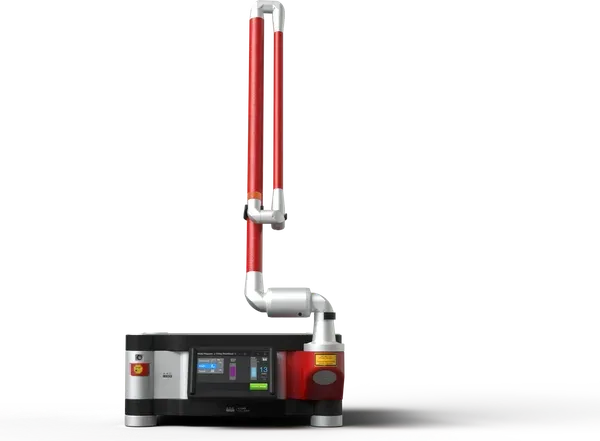
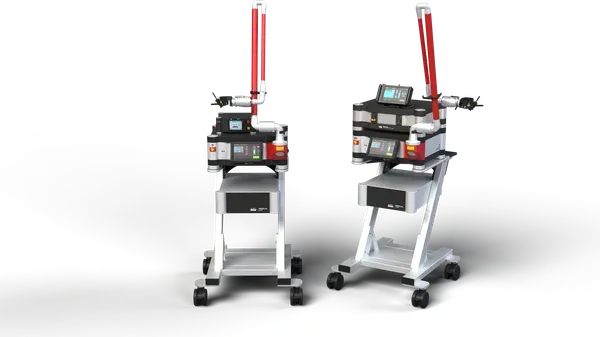
The diode laser FOX 810 (A.R.C. Laser GmbH, Nuremberg), which is used for treatment, is particularly well suited for the local conditions. The device is easy to operate, the procedure can be quickly learned, and, after proper training, it is delegable. Additionally, it does not require an external power supply, as it is battery-operated – a significant advantage in a region where power supply is often unreliable. Weighing less than 1.5 kg, the FOX 810 is also portable, which plays a crucial role in remote areas.
Important Progress in Ophthalmic Care and a Sustainable Approach for the Future
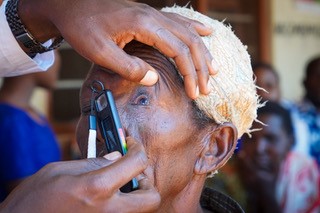
On-site diagnostics by ophthalmic professionals are carried out with the Arclight Ophthalmoscope², a lightweight, cost-effective, solar-powered ophthalmoscope, perfectly suited for fieldwork. Once the diagnosis is made, patients are referred to ophthalmologists, who, after reviewing the indication, perform a µCPC. This has already become a standard procedure for glaucoma treatment (POAG and PEX). Trained local professionals thus provide high-quality care to the affected patients on-site.
TanZanEye works with local professionals and partners, adapting to local conditions to ensure high-quality ophthalmic care in western Tanzania. Karsten Paust: "As a development partner, our role is not to prescribe solutions, but to listen, learn, and support locally driven initiatives. Local expertise is key," he says.
It is very important to us, especially in the context of Glaucoma Awareness Month, to highlight this comprehensive project and raise awareness about glaucoma and the challenges in ophthalmic care. Only through sustainable, local initiatives can healthcare in remote regions be effectively improved.
Success in global development isn't about what we think communities need, it's about understanding what they actually need.
The conversation partners for this article were: Dr. Karsten Paust, specialist in ophthalmology, project manager at TanZanEye, and Dr. Martin Kotula, assistant physician in ophthalmology.
The images are provided courtesy of TanZanEye e.V. with kind permission.
1 Ophthalmologie https://doi.org/10.1007/s00347-022-01668-6
²Link Arclight: https://arclightprojectshop.co.uk/blogs/news/the-arclight-story-a-journey-of-collaboration-and-impact